Full Case Study
Celigo
Marketing Performance Dashboard
Transforming data chaos into strategic intelligence
2025
Celigo's marketing team had wanted a unified analytics dashboard for years, but multiple attempts had failed. The problem was fragmentation: critical insights lived in isolated silos, forcing the team to make decisions based on incomplete information. I designed and built a comprehensive 9-page marketing dashboard in Looker Studio that integrated Google Analytics 4, Google Ads, and SEMrush data, enabling real-time performance monitoring, competitive SEO tracking, and multi-channel attribution analysis that finally gave leadership the visibility they needed.
Roles, Tasks
Data Integration, Analytics Strategy, UX/UI Design, Dashboard Development, Stakeholder Management, Technical Implementation
The Challenge
Build a unified analytics system that integrates disparate data sources, enables real-time decision-making, and makes complex performance data accessible to non-technical stakeholders—solving a multi-year problem that had defeated previous attempts.
Create an analytics dashboard that marketing leadership had been requesting for years but that multiple previous attempts had failed to deliver.
The marketing team's analytical blindness represented both competitive disadvantage and missed optimization opportunity. Without integrated analytics, fundamental questions went unanswered: Which campaigns delivered quality engagement versus empty clicks? Where should budget be reallocated for maximum ROI? How did paid efforts compare to organic performance? What were competitors doing in the search landscape? The complexity of blending disparate data sources—each with different schemas, time zones, and authentication requirements—combined with the need for both technical integration skills AND user experience design sensibility had proven insurmountable. Most analytics projects fail at one of two extremes: technically sound but unusable (built by engineers without UX consideration), or visually appealing but analytically shallow (built by designers without metrics rigor). The team needed someone who could bridge both worlds. For a fast-growing iPaaS company in a crowded market, this analytical blindness had concrete consequences. Leadership couldn't confidently allocate marketing budget. Campaign managers couldn't distinguish high-value audiences from low-quality traffic. The organization lacked systematic competitive intelligence. Marketing decisions were based on incomplete information, delayed insights, and fragmented reports that were often days old by the time they reached stakeholders.
Strategic Approach
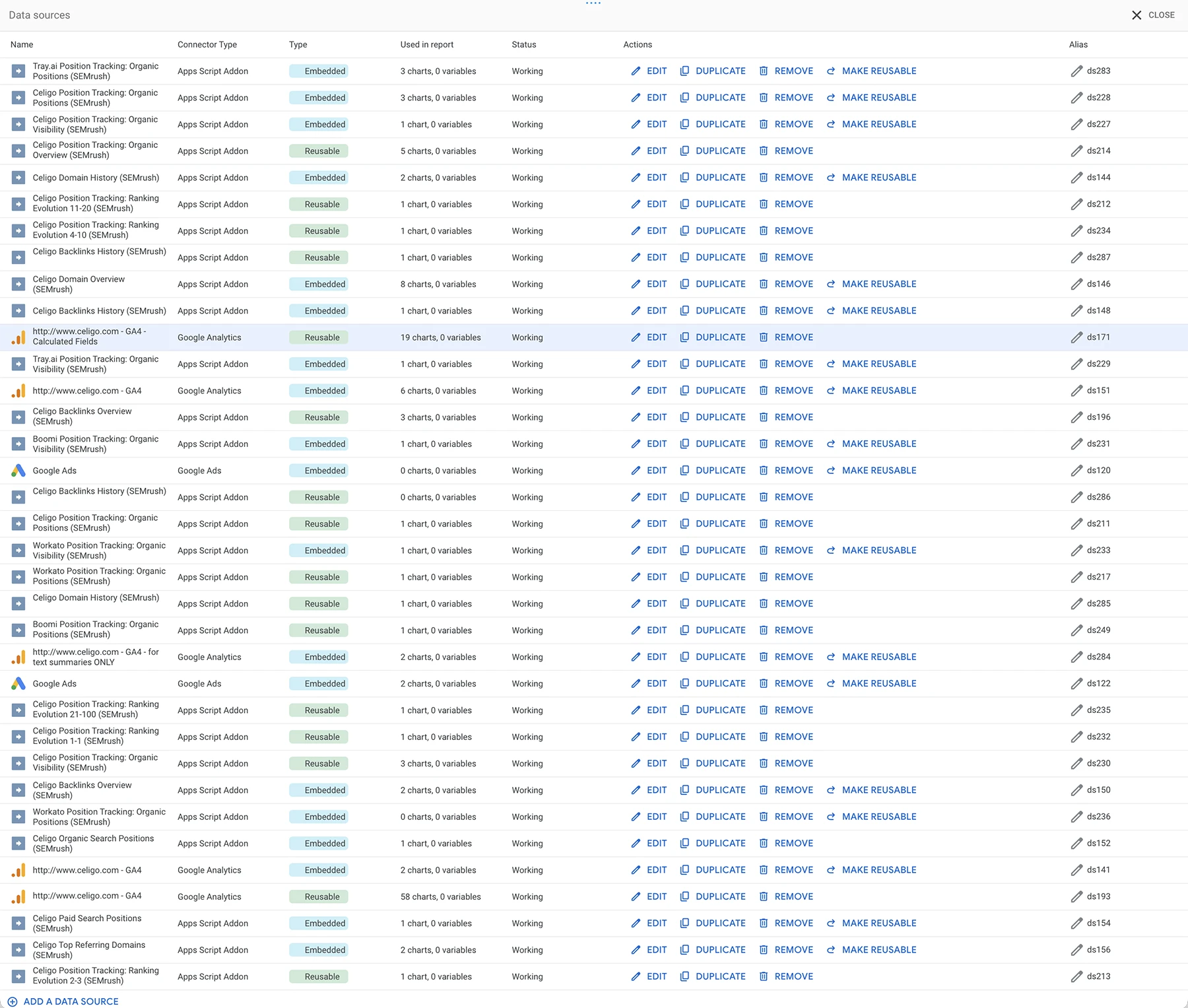
Connected data sources for the marketing dashboard. To paraphrase a "web based" luminary: With great amounts of data comes great responsibility.
Success required more than technical proficiency with Looker Studio—it demanded strategic thinking about which metrics actually predicted business outcomes and how to make complex data accessible to non-technical stakeholders.
Beyond Vanity Metrics
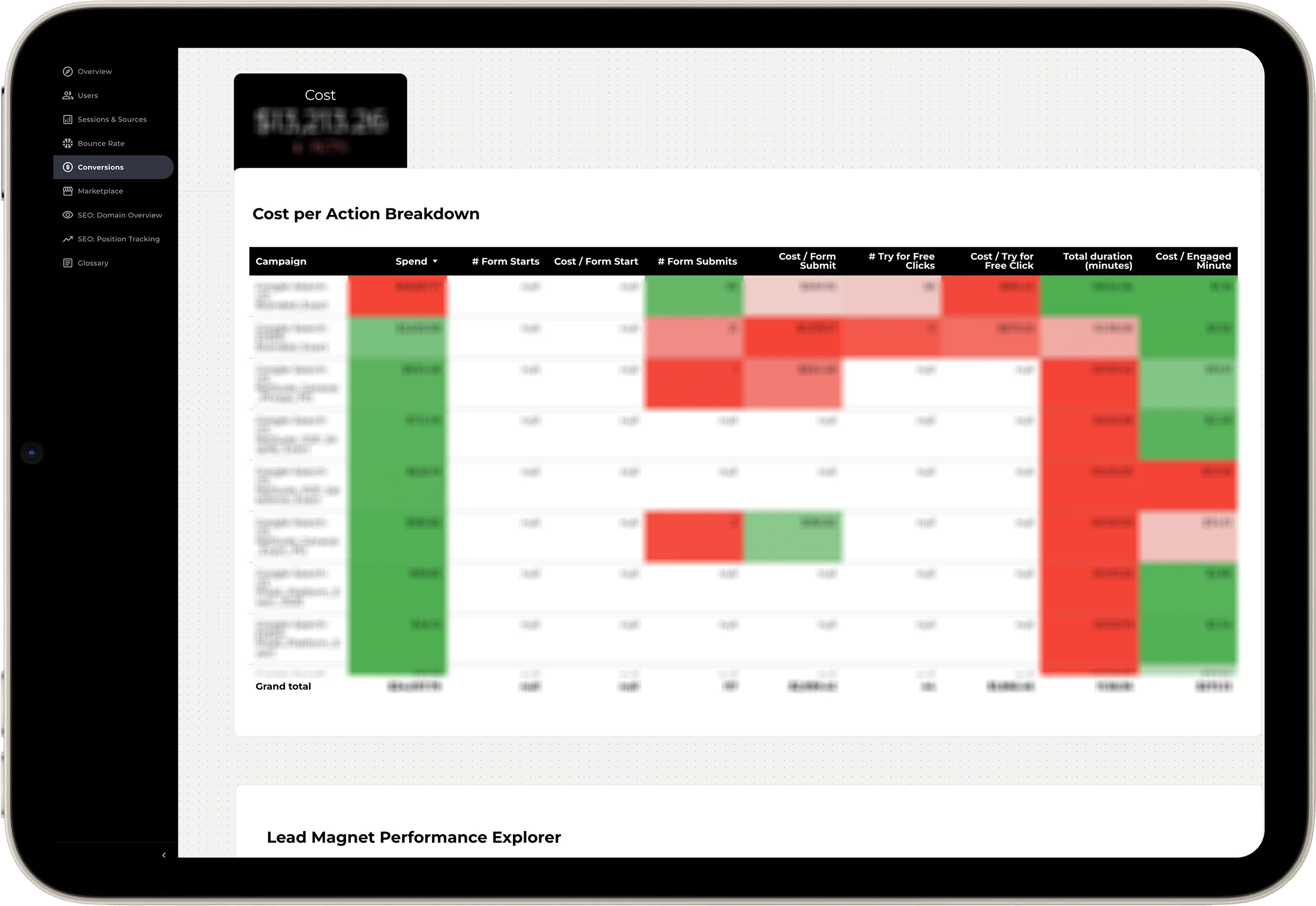
Rather than surfacing standard measurements like click-through rates and cost-per-click, I focused on revealing deeper engagement indicators that predict actual business outcomes. I created compound metrics by blending data sources; for example, "cost per engaged minute" merged Google Ads spend data with GA4 session duration. This enabled the team to distinguish between campaigns that drove empty clicks versus meaningful interactions.
Also, even if a particular campaign was deemed a failure for not reaching its primary goals (like # of form submissions), surfacing additional data points has the potential to still teach us valuable lessons, such as: This landing page didn't drive a ton of form submissions, but whatever we did with our targeting and/or bid strategy netted a lot of new visitors who were much more highly engaged than usual. Let's bookmark this for the next time we need to run an awareness play.
Data Democratization Through Design
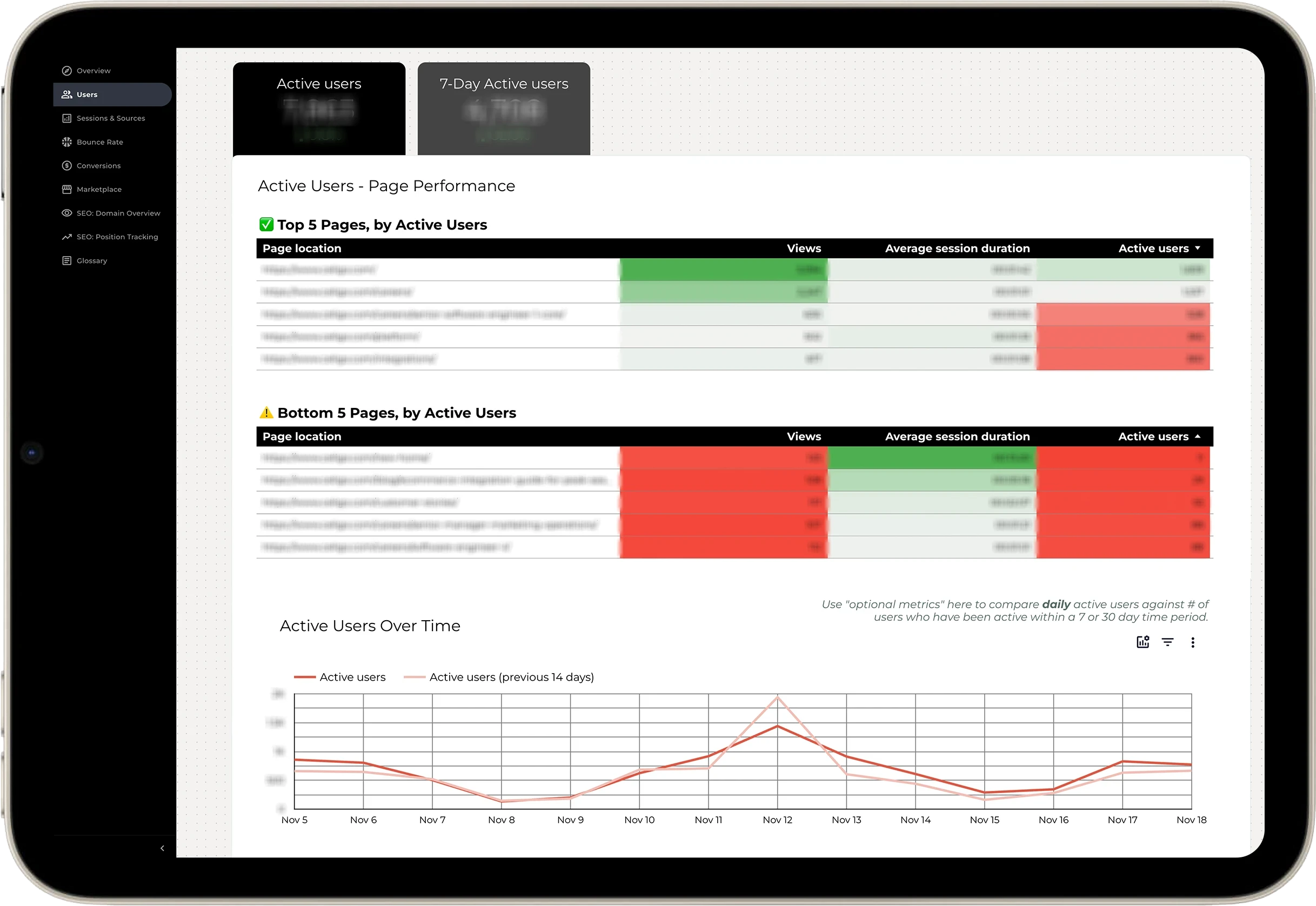
The dashboard couldn't be a technical tool requiring analytics expertise. Every marketer needed to quickly understand performance at a glance and drill into specifics when needed. Clean information design with consistent visual hierarchy across all pages—primary KPIs featured prominently with directional indicators (up/down trends), supporting metrics in logical groups, and detailed tables for drill-down without cluttering the main view. Color coding provided instant context: green for top performers, red for attention areas, neutral for reference information.
Strategic Learning Framework
The system needed to support hypothesis testing and reveal non-obvious insights. By blending data sources, I enabled comparative analysis that would have remained hidden in siloed data. The approach created scenarios like this: a campaign with modest click volume but high engagement duration might signal a valuable audience segment worth expanding. Conversely, high CTR with minimal site engagement indicates poor targeting—worth pausing quickly rather than burning budget. This nuanced view shifted conversations from "look at our clicks" to "are we driving quality engagement?"
Competitive Intelligence Integration
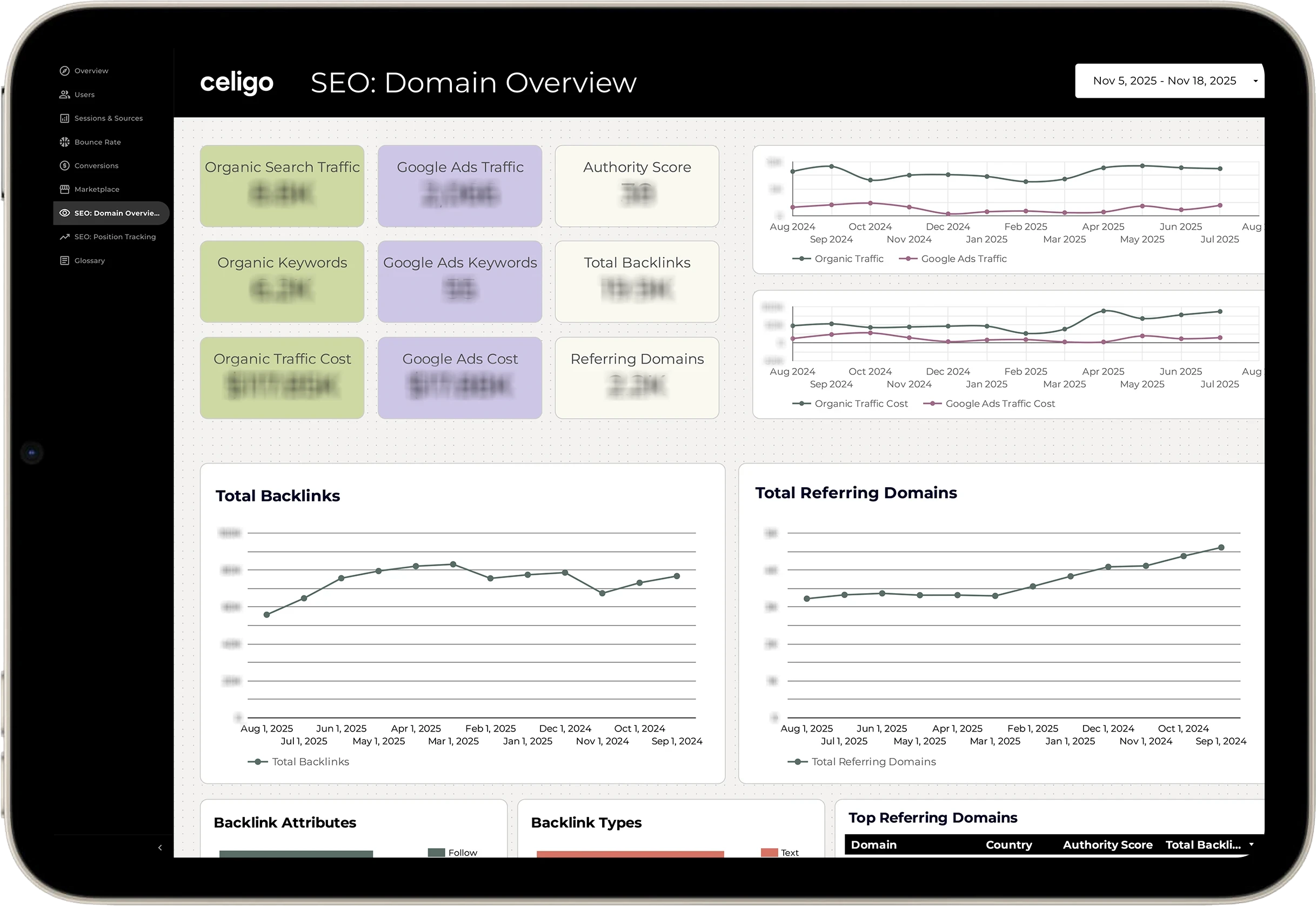
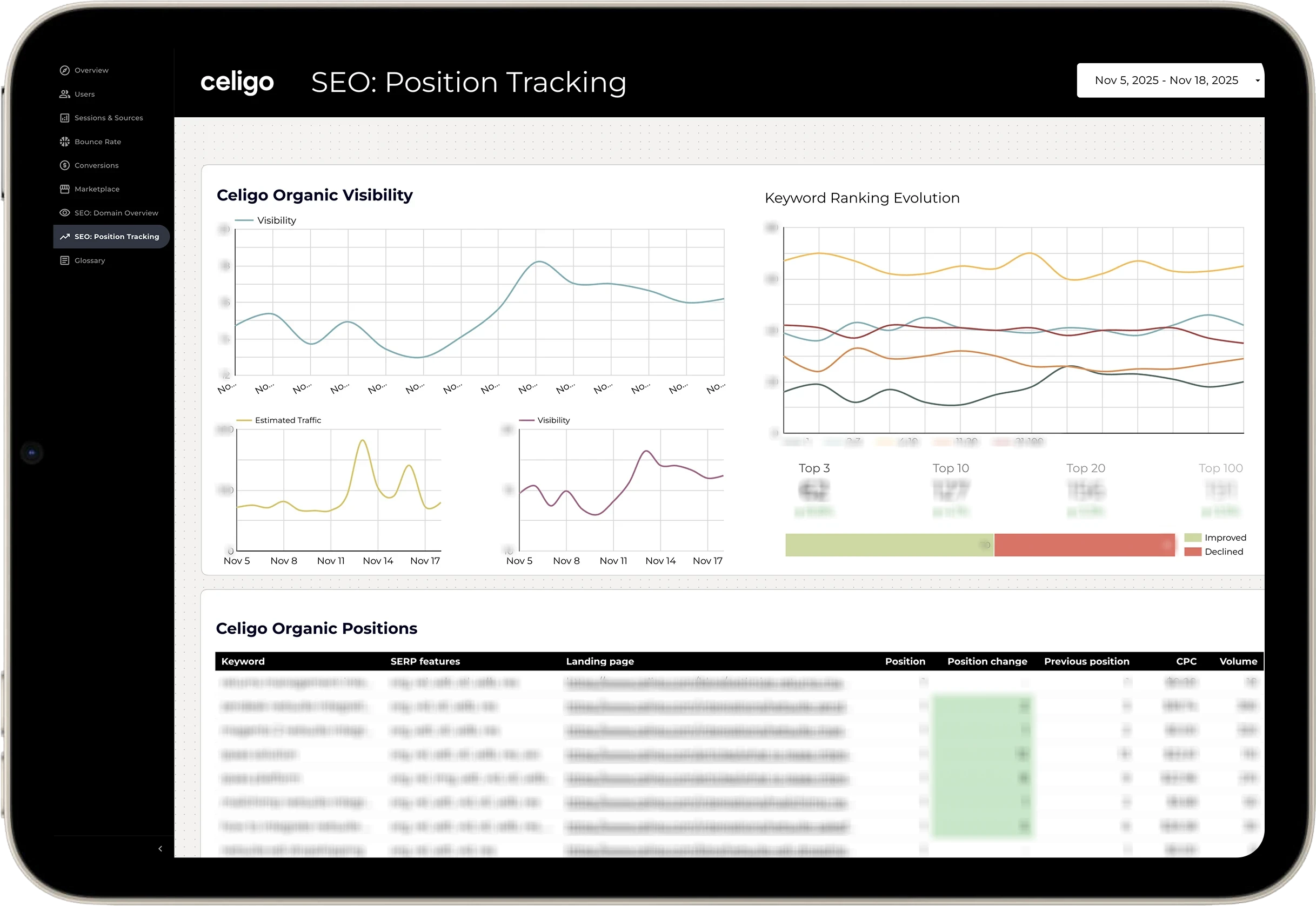
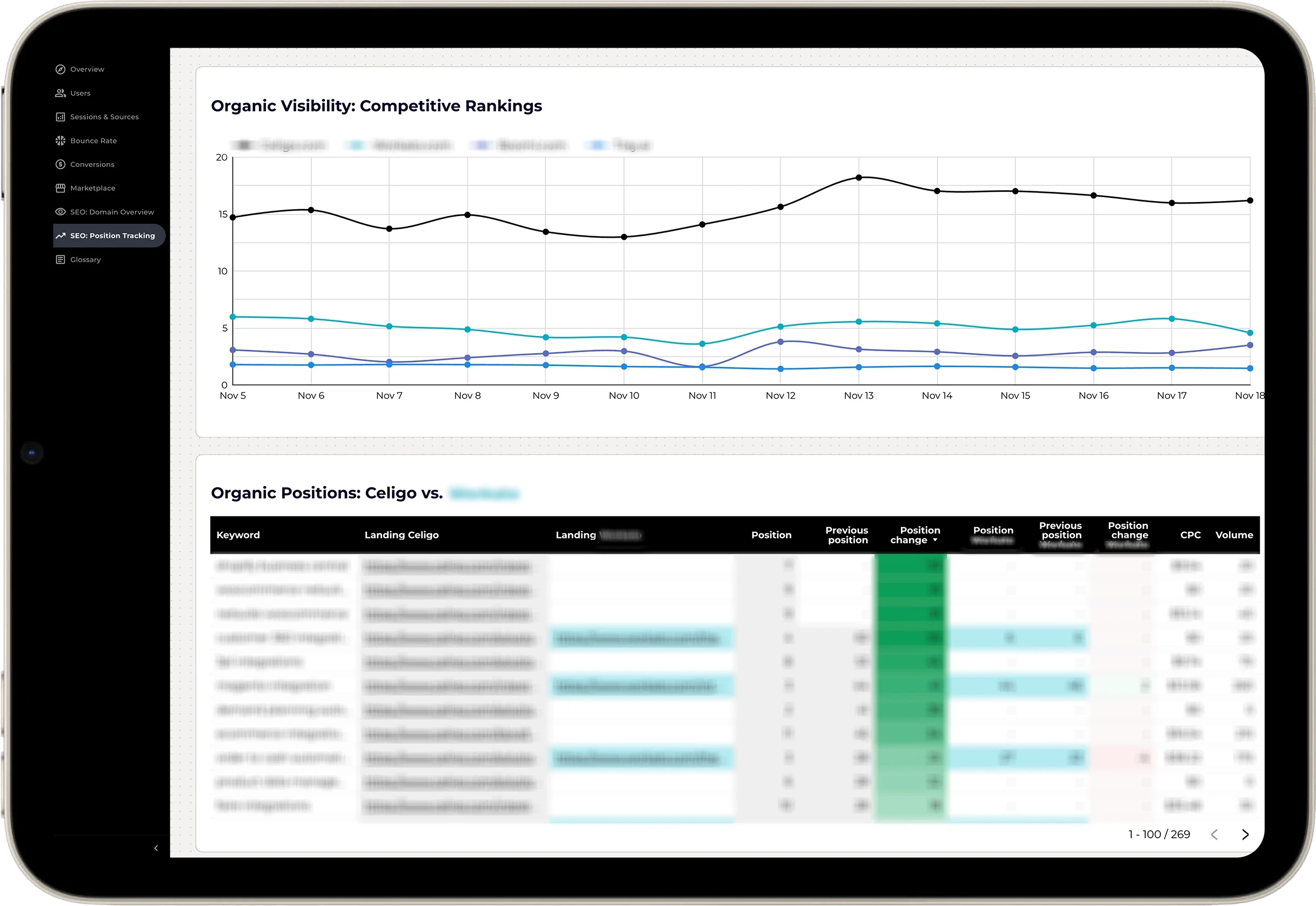
Beyond internal metrics, the team needed systematic competitive visibility rather than ad-hoc monitoring. I integrated SEMrush API data to create dedicated competitive position tracking against named competitors (Workato, Boomi, Tray.ai), showing not just current rankings but ranking changes over time. This enabled the team to spot competitive shifts and respond strategically rather than discovering threats months later.
Building the System
Design and implementation focused on creating a scalable architecture that balanced technical sophistication with user accessibility.
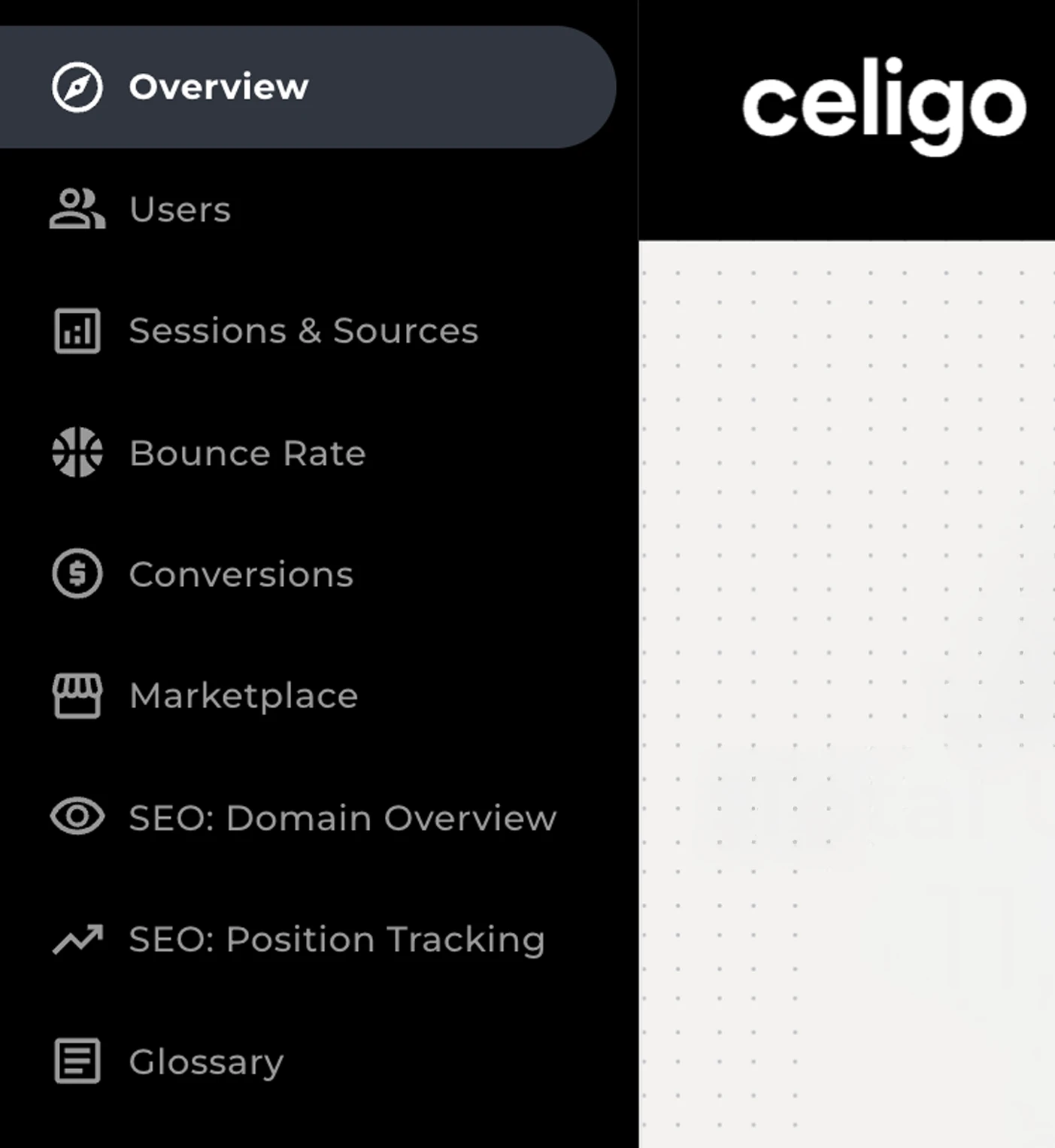
Dashboard Architecture
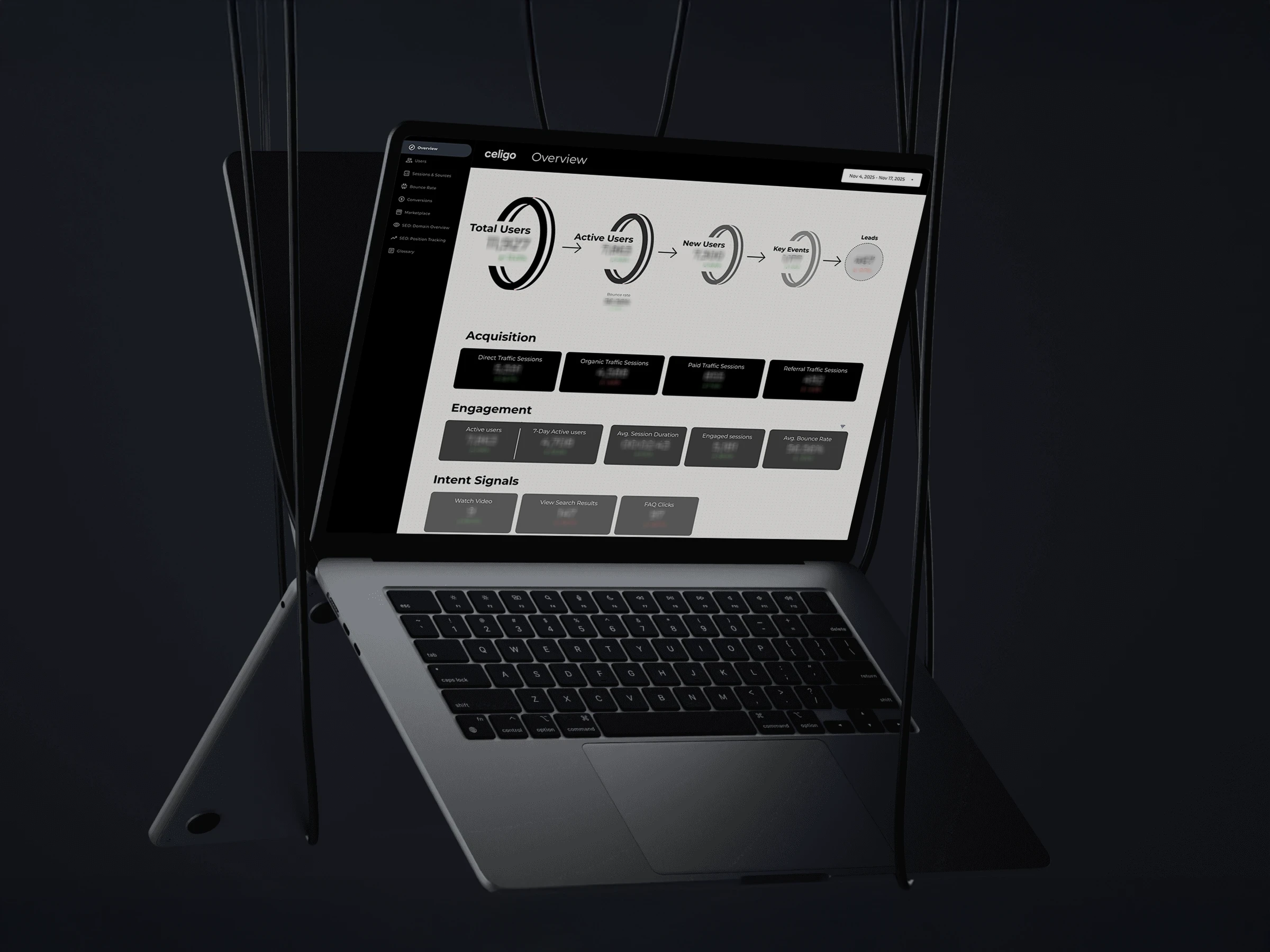
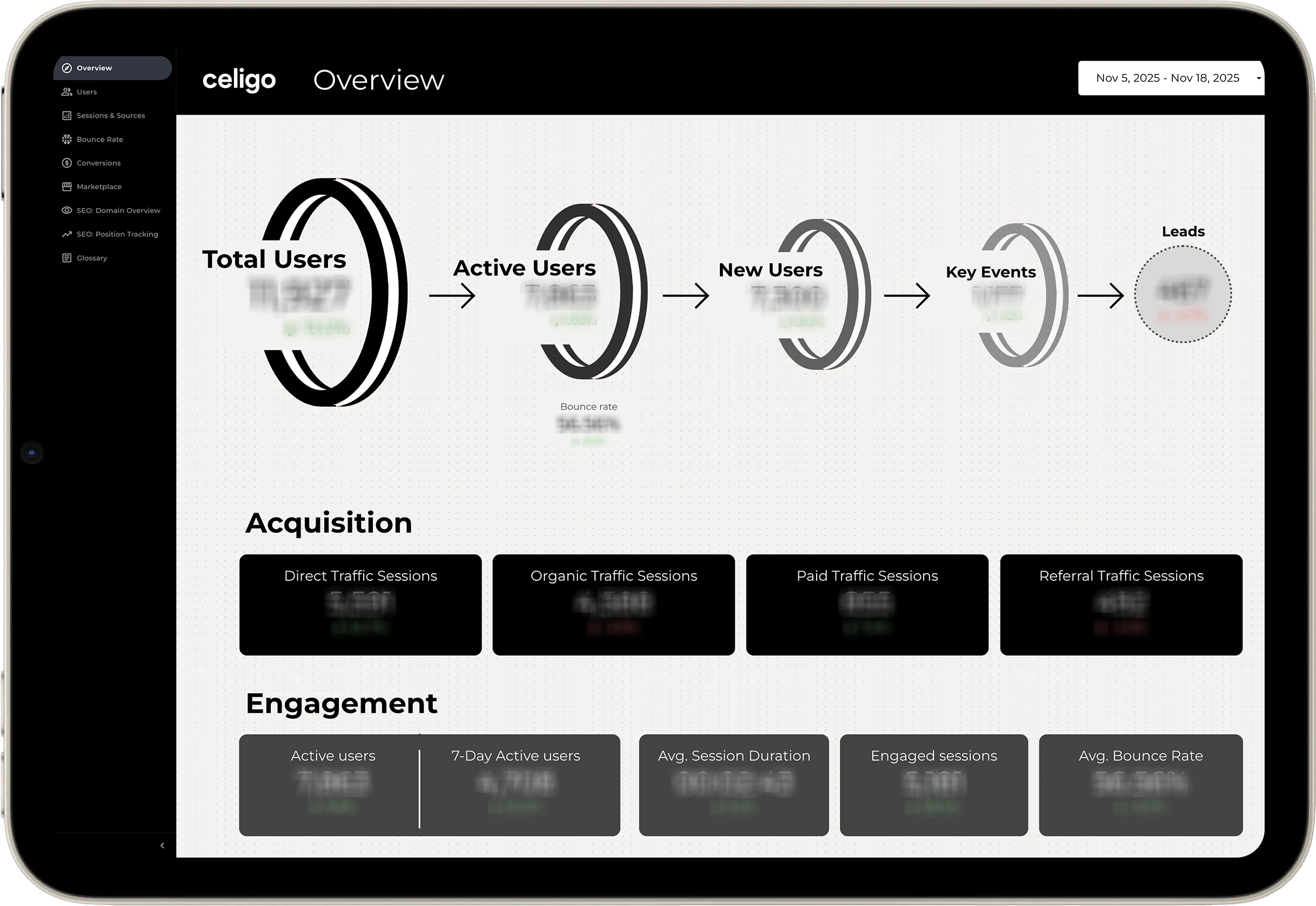
I designed a 9-page structure based on stakeholder journey analysis, ensuring each section addressed different analytical needs while maintaining consistent design language:
Overview: Executive KPI summary with acquisition funnel
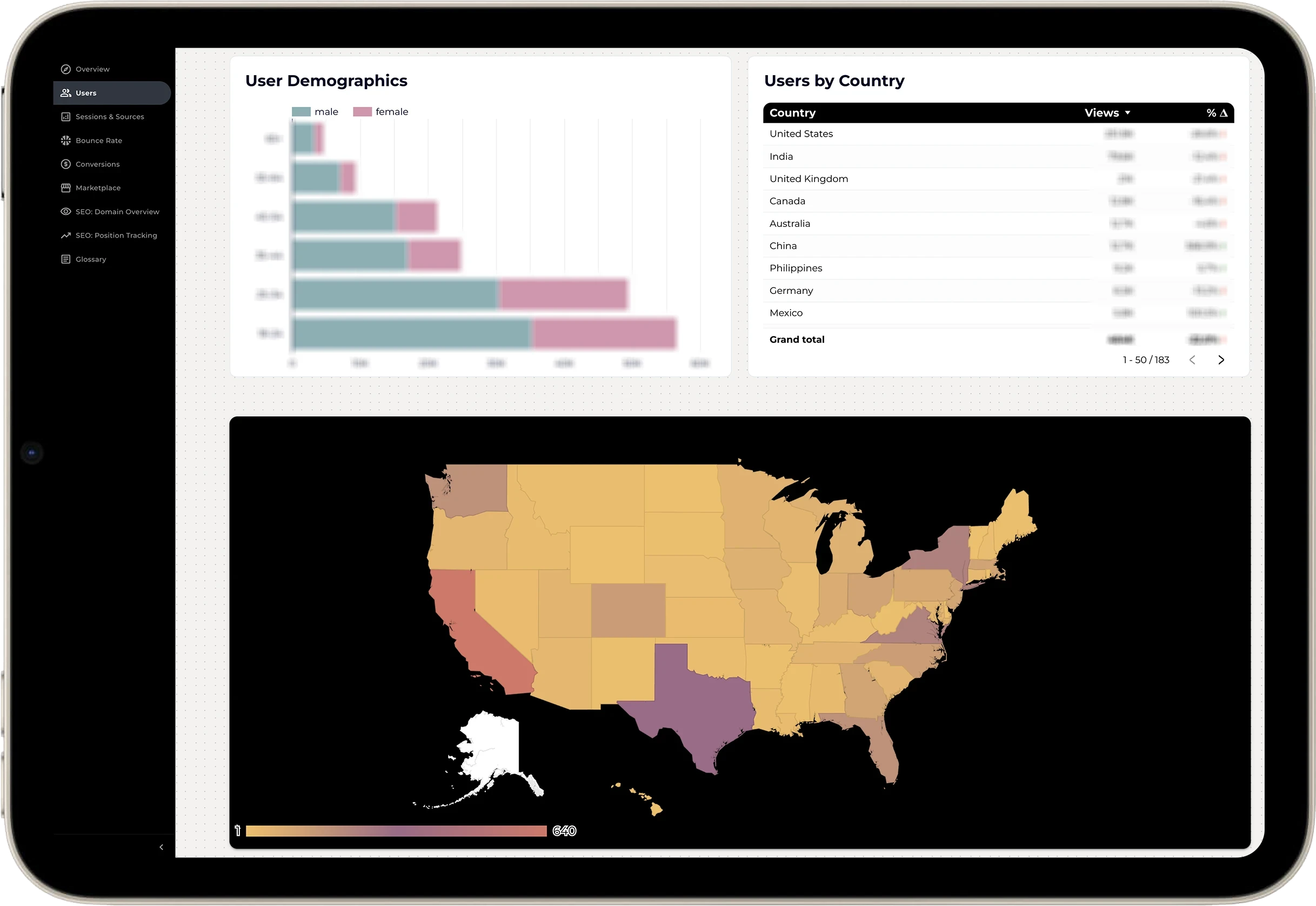
Users: Demographics, new vs. returning behavior
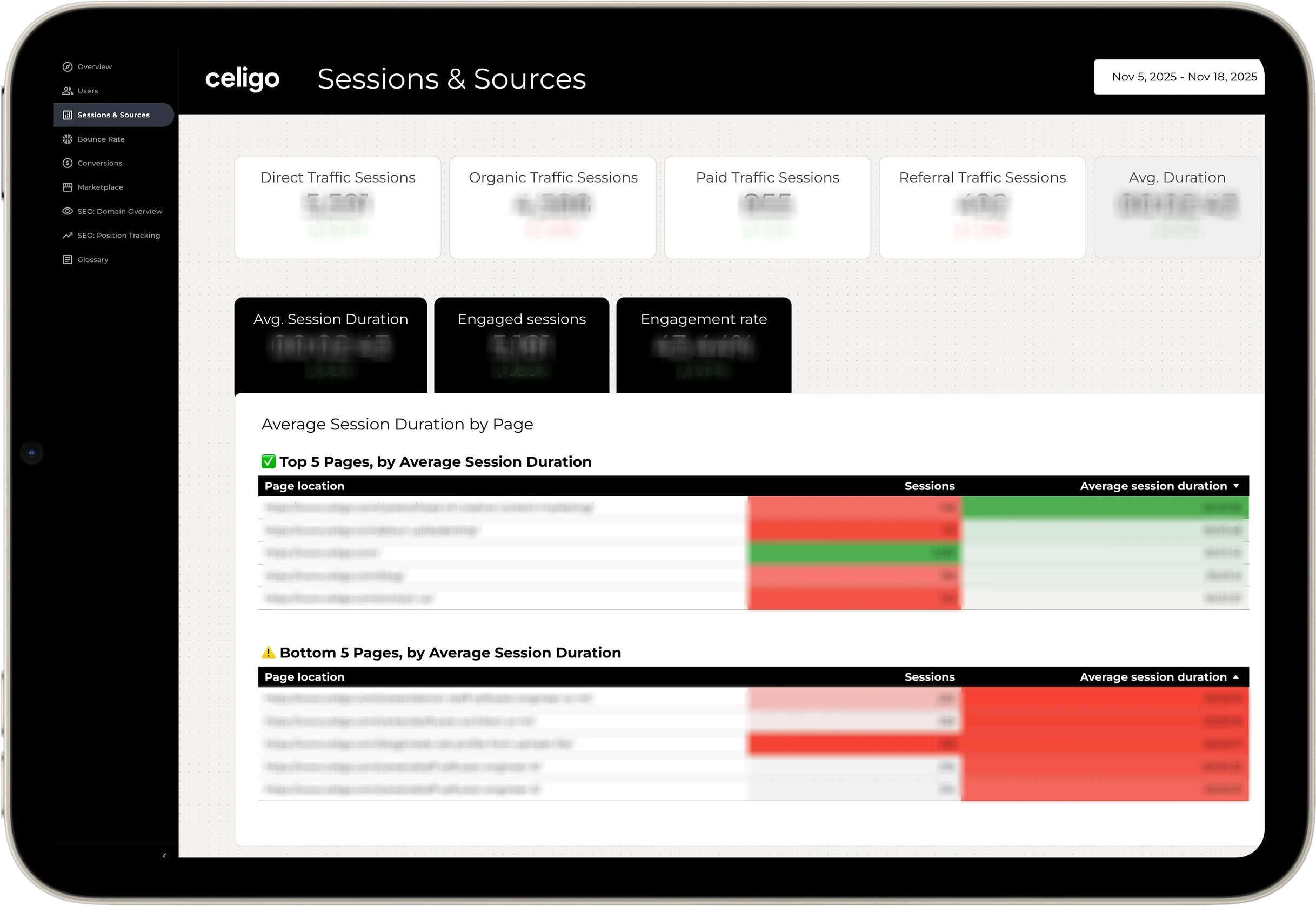
Sessions & Sources: Traffic channel performance
Bounce Rate: Page-level engagement quality analysis
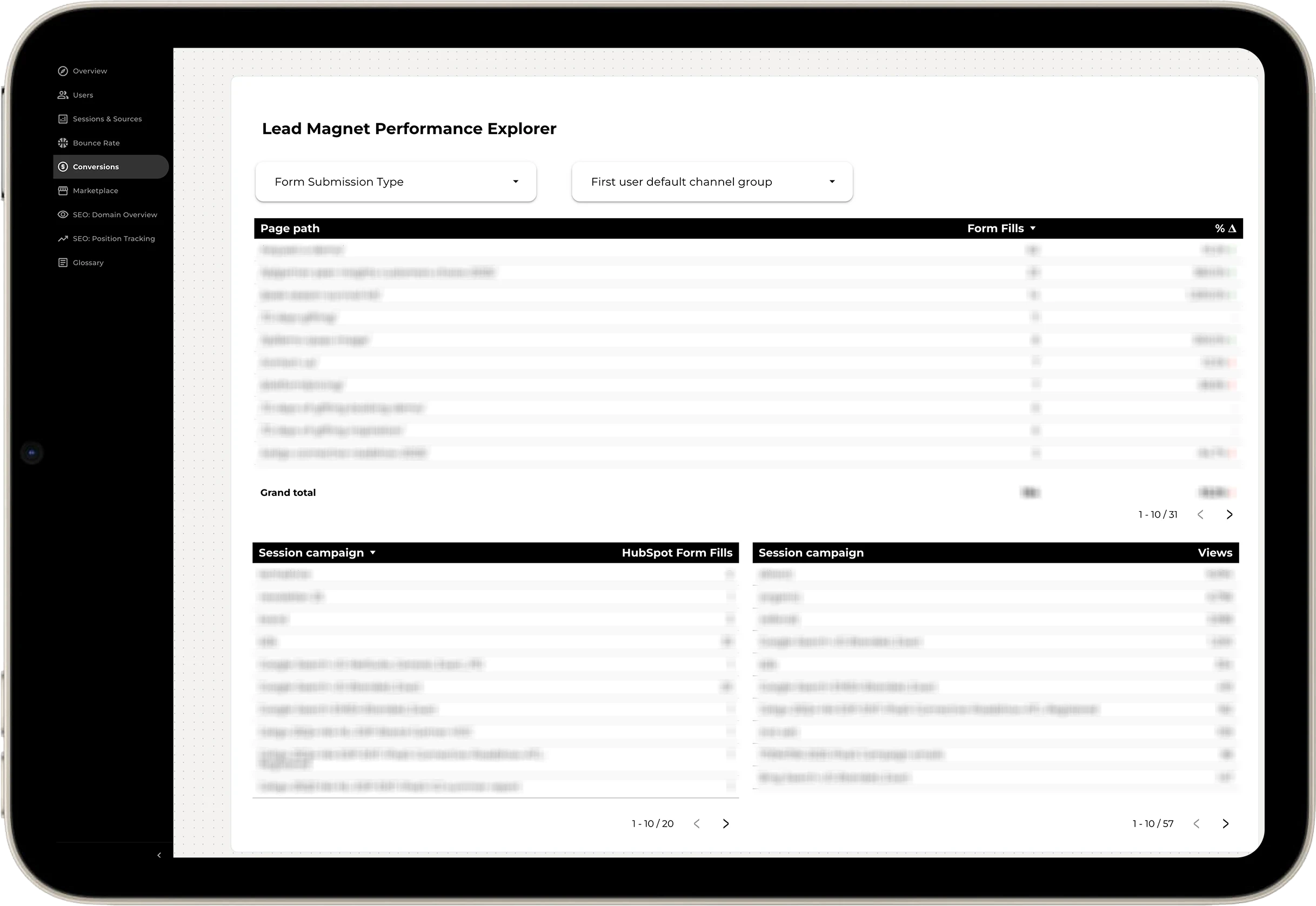
Conversions: Lead gen performance and CPC metrics
Marketplace: Integration marketplace performance
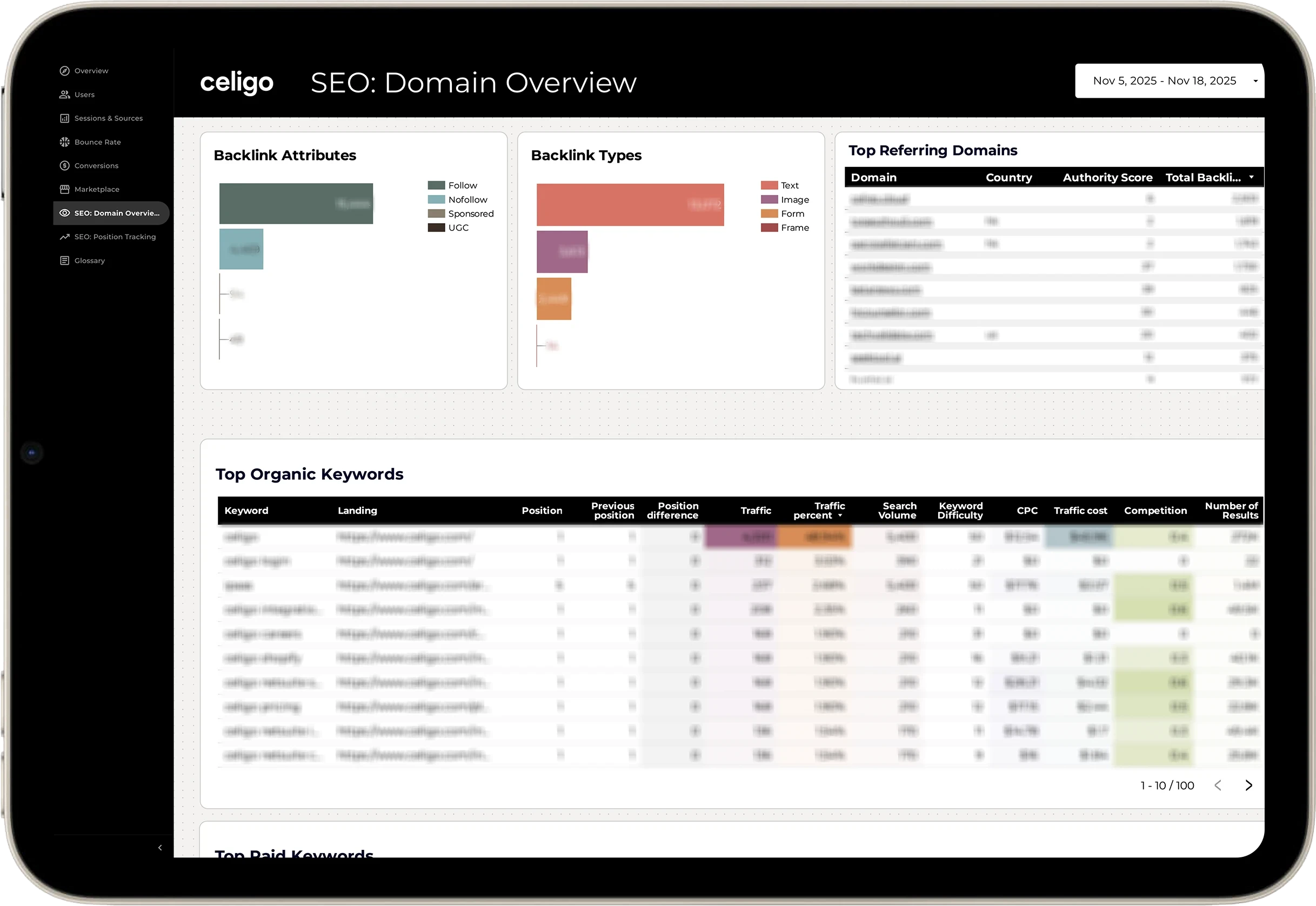
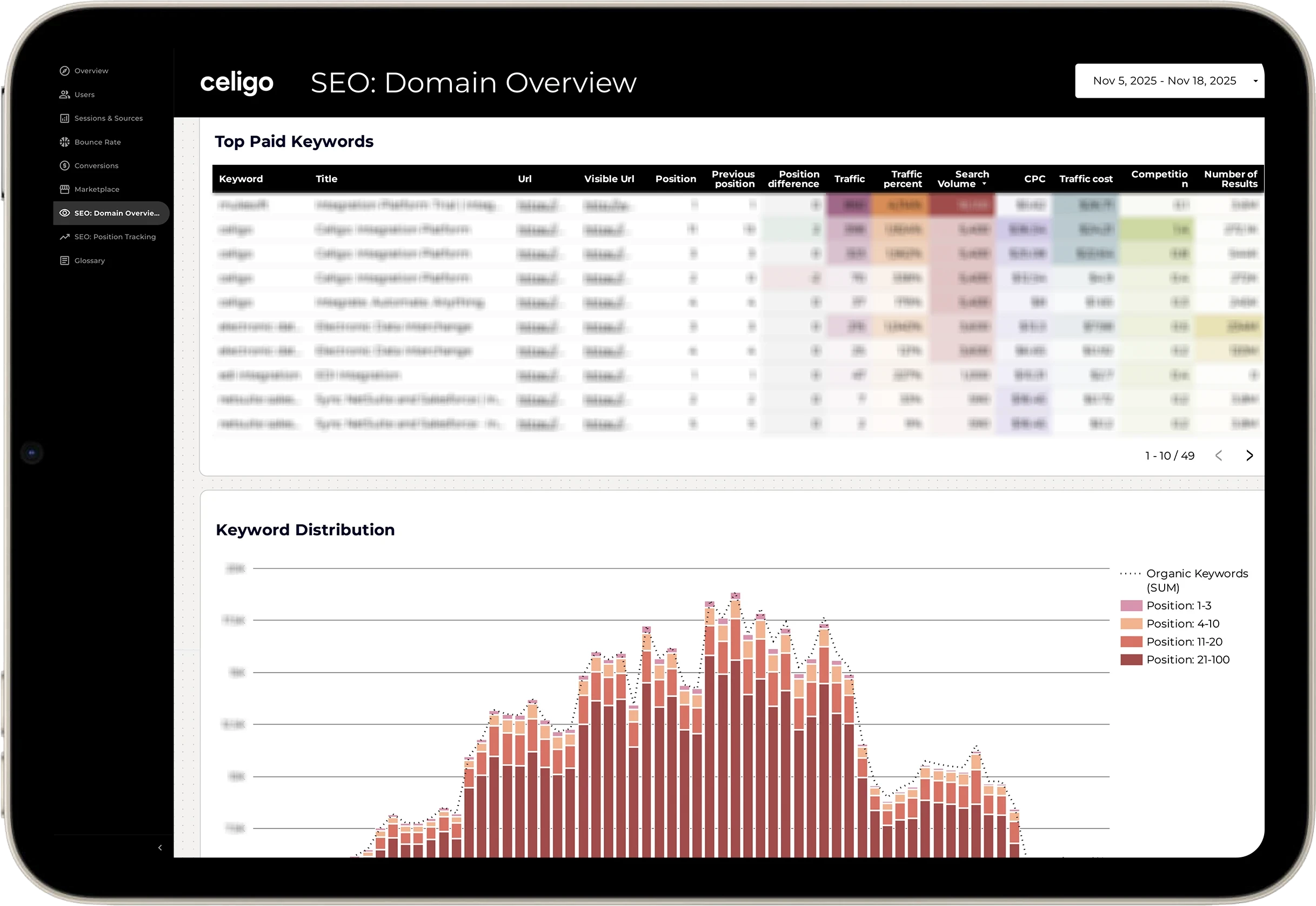
SEO: Domain Overview
Organic visibility trends and backlink healthSEO: Position Tracking
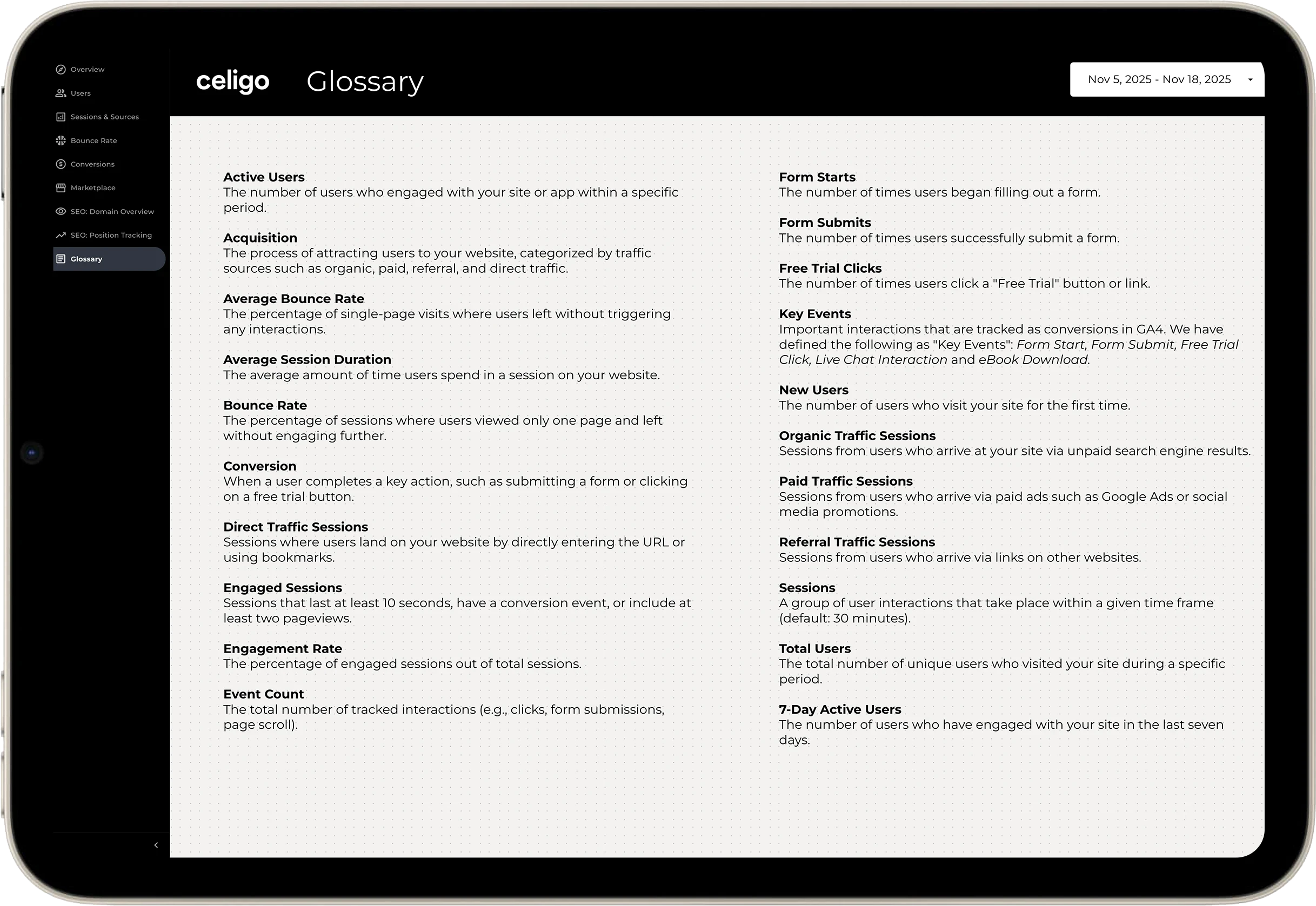
Competitive keyword positioningGlossary: Definitions for consistent team alignment
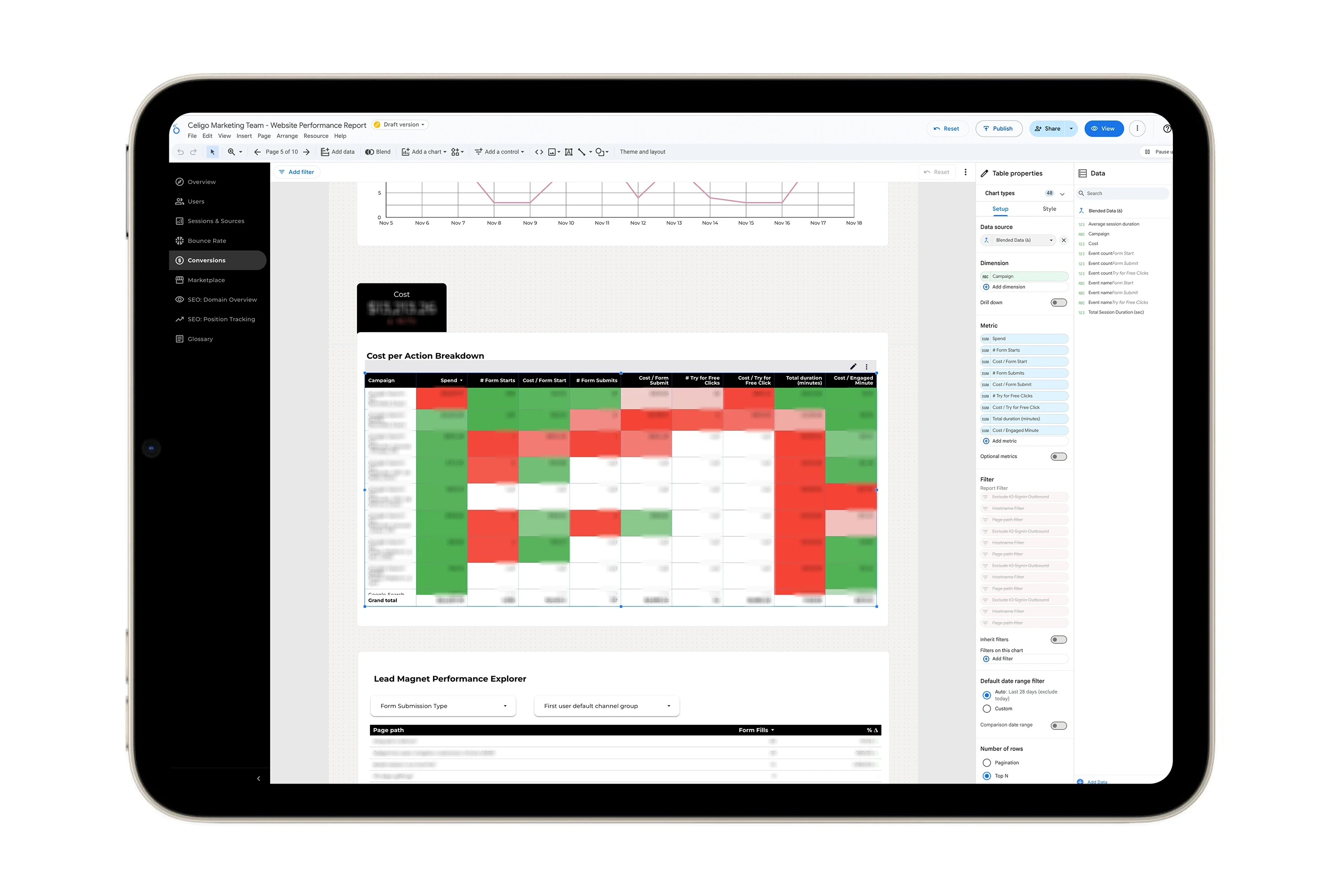
Campaign managers got granular cost-per-action breakdowns. Content strategists got page-level engagement analysis. Leadership got executive summaries with trend indicators. Each audience could find what they needed without wading through irrelevant data.
Technical Implementation
Blending multiple data sources while maintaining accuracy required careful configuration of join conditions—matching campaign identifiers between Google Ads and GA4, correlating page URLs across different tracking systems, ensuring date ranges aligned properly across sources with different time zones. SEMrush integration required building a custom Apps Script connector to pull API data into Looker Studio. This wasn't just technical development—it required strategic thinking about which SEMrush metrics would provide actionable insights rather than overwhelming users with competitive intelligence data. Metrics like "weighted bounce rate" (accounting for page traffic volume, not just percentage) and "cost per engaged minute" required custom formulas that handled edge cases and null values appropriately.
Iterative Refinement
The initial launch wasn't the final product. Early stakeholder feedback revealed opportunities for enhancement: adding filters for segment analysis, creating bookmark views for common scenarios, and refining metric definitions based on how people actually used the data. The "cost per engaged minute" metric exemplified this iterative approach. While initially included as a novel engagement indicator, it proved particularly valuable for evaluating brand awareness campaigns that prioritized consideration over immediate conversion. Seeing this resonate prompted expansion of similar compound metrics that revealed nuanced performance beyond standard analytics.
Design Philosophy: Marketing analytics often fails because it prioritizes technical comprehensiveness over usability. Data scientists build dashboards they understand but marketing managers struggle to interpret. Conversely, marketing-focused dashboards often lack analytical rigor, presenting surface metrics without the depth needed for strategic optimization. My approach bridged this gap through intentional information design—making complexity accessible while maintaining analytical depth.
Comprehensive Marketing Intelligence
A 9-page Looker Studio dashboard integrating Google Analytics 4, Google Ads, and SEMrush data into a unified marketing intelligence platform.
The dashboard's power came from blending data sources to create compound metrics that revealed performance patterns invisible in siloed data. "Cost per engaged minute" merged Google Ads spend data with GA4 engagement quality, enabling the team to distinguish between campaigns that drove empty clicks versus meaningful interaction. "Weighted bounce rate" accounted for page traffic volume, not just percentages—providing nuanced quality assessment rather than misleading averages. These custom calculations transformed how the team evaluated campaign performance, shifting focus from vanity metrics to genuine business impact. The page architecture served different analytical needs without requiring separate dashboards. Campaign managers got granular cost-per-action breakdowns showing which campaigns delivered ROI. Content strategists got page-level engagement analysis revealing which content drove quality traffic. Leadership got executive summaries with trend indicators for strategic decision-making. Each audience could find what they needed without wading through irrelevant data or learning complex filtering systems. Technical architecture blended multiple data sources seamlessly while maintaining accuracy through careful join configuration. Custom calculated fields revealed insights standard analytics would miss. The system was designed to scale—providing structure for consistency while allowing flexibility for segment analysis and scenario exploration.
Strategic Impact
"Well done and thank you for the efforts here. We've needed this for years. Now we can actually see how our efforts are impacting traffic." "This is flippin' awesome!" "Great job today. That is exactly what [our CEO] is expecting - clarity in terms of what we are doing, visibility into metrics, and alignment with broader initiatives."
— Marketing Leadership, Celigo
This project solved a multi-year problem that had defeated previous attempts, enabling data-driven decision-making and improving Marketing Team agility through transparent, real-time performance metrics.
For the first time, the team had a single source of truth answering "How is marketing performing?" with concrete, current data rather than fragmented reports assembled manually. The blended metrics revealed insights that would have remained hidden in siloed data. Analysis showed that high click-through rates didn't always correlate with valuable engagement—some campaigns with modest CTR but high session duration indicated genuinely interested prospects worth cultivating even if they didn't immediately convert. This shifted budget allocation toward quality engagement rather than vanity metrics.
Conversely, the dashboard exposed campaigns generating impressive click volume but minimal site engagement—indicating poor targeting or misleading ad creative. The team could quickly optimize or pause underperforming efforts rather than letting them consume budget inefficiently.
The most significant impact was cultural rather than tactical. The dashboard created a shared analytical foundation that elevated marketing conversations from subjective opinions to evidence-based discussions. Leadership meetings shifted from "I think this campaign is working" to "The data shows this campaign drives higher engaged sessions per dollar spent than alternatives." Cross-functional collaboration improved because stakeholders from Product, Sales, and Executive teams could access the same performance context.
The ultimate validation: without mandating usage, the dashboard became the default reference for marketing performance discussions. When questions arose about campaign effectiveness, channel performance, or competitive positioning, stakeholders reflexively opened the dashboard to find answers. That organic adoption—the team choosing to use it because it delivered genuine value—validated the strategic approach of combining technical sophistication with user-centered design.